Blogs

Thai Ridgeback Dog Diseases

The Thai Ridgeback Dog is a native Thai breed known for its strength and intelligence. Like all dog breeds, Thai Ridgebacks are prone to certain health issues. Understanding common diseases in Thai Ridgeback dogs helps owners keep them healthy and extend their lifespan.

1. Skin Diseases

Thai Ridgebacks can suffer from skin problems such as irritation, rashes, or fungal infections. Common causes include fleas, ticks, or allergies. Regular skin check-ups and appropriate medicated shampoos can prevent severe skin conditions.

2. Eye Problems

Cataracts, conjunctivitis, and dry eyes are common in Thai Ridgebacks. Routine eye cleaning and veterinary check-ups help prevent these conditions.

3. Dental and Gum Diseases

This breed may experience dental issues like plaque, tartar, and gum disease. Regular tooth brushing and professional dental checks are essential for oral health.

4. Digestive Disorders

Symptoms like diarrhea, vomiting, or poor digestion are common, especially if dogs eat irregularly or consume inappropriate foods. Providing high-quality, consistent meals reduces the risk.

5. Obesity

Although Thai Ridgebacks are naturally active, overeating and lack of exercise can lead to obesity. Proper diet control and regular physical activity are crucial.

โรคสุนัขไทยหลังอาน

สุนัขไทยหลังอาน (Thai Ridgeback Dog) เป็นสุนัขพื้นเมืองของไทยที่มีความแข็งแรงและฉลาด แต่เช่นเดียวกับสุนัขพันธุ์อื่น ๆ พวกเขาก็มีความเสี่ยงต่อการเกิดโรคบางชนิดที่เจ้าของควรใส่ใจ เพื่อให้สุนัขไทยหลังอานของคุณมีสุขภาพแข็งแรงและมีอายุยืนยาว เรามาดู โรคที่พบบ่อยในสุนัขไทยหลังอาน กัน

1. โรคผิวหนัง

สุนัขไทยหลังอานมักมีปัญหาผิวหนัง เช่น การระคายเคือง ผื่นคัน หรือเชื้อรา สาเหตุหลักมักมาจากเห็บ หมัด หรือภูมิแพ้ เจ้าของควรตรวจสุขภาพผิวหนังอย่างสม่ำเสมอ และใช้แชมพูหรือยารักษาผิวหนังตามคำแนะนำของสัตวแพทย์

2. โรคตา

ต้อกระจก ตาอักเสบ หรือดวงตาแห้งเป็นโรคที่พบได้บ่อยในสุนัขไทยหลังอาน การทำความสะอาดดวงตาและตรวจสุขภาพตาเป็นประจำสามารถช่วยป้องกันโรคเหล่านี้ได้

3. โรคฟันและเหงือก

สุนัขพันธุ์นี้มักมีปัญหาเรื่องฟันและเหงือก เช่น คราบหินปูน และฟันผุ การแปรงฟันเป็นประจำและการตรวจฟันโดยสัตวแพทย์จะช่วยลดความเสี่ยง

4. โรคทางเดินอาหาร

อาการท้องเสีย อาเจียน หรือปัญหาการย่อยอาหารพบได้บ่อย โดยเฉพาะสุนัขที่กินอาหารไม่ตรงเวลา หรือกินอาหารที่ไม่เหมาะสม การเลือกอาหารคุณภาพดีและสม่ำเสมอช่วยลดความเสี่ยงได้

5. โรคอ้วน

แม้สุนัขไทยหลังอานจะมีร่างกายแข็งแรง แต่การกินมากเกินไปและออกกำลังกายน้อย อาจทำให้เกิดโรคอ้วน ควบคุมอาหารและให้การออกกำลังกายสม่ำเสมอจึงสำคัญมาก

Common Diseases in Thai Ridgeback Dogs

The Thai Ridgeback Dog is a native breed known for its robust health and adaptability to Thailand’s hot and humid climate. However, like any breed, they are susceptible to certain health issues. It’s essential for owners to be aware of these conditions to ensure timely prevention and care.

Common Health Issues in Thai Ridgeback Dogs

  1. Tick-Borne Diseases (Ehrlichiosis, Babesiosis, Anaplasmosis)
    • Cause: Transmission through tick bites.
    • Symptoms: Lethargy, loss of appetite, pale gums, fever, easy bleeding, and weight loss.
    • Prevention: Regular tick control using topical or oral medications.
  2. Rabies
    • Cause: Infection from bites by rabid animals.
    • Symptoms: Aggression, drooling, paralysis, and death.
    • Prevention: Annual rabies vaccination.
  3. Canine Distemper
    • Cause: Virus affecting unvaccinated dogs.
    • Symptoms: Fever, nasal discharge, coughing, seizures, and neurological signs.
    • Prevention: Complete vaccination as per the schedule.
  4. Parvovirus
    • Cause: Highly contagious virus, especially in puppies under six months.
    • Symptoms: Severe vomiting, bloody diarrhea, dehydration.
    • Prevention: Vaccination starting at six weeks of age.
  5. Skin Problems
    • Cause: Fleas, ticks, fungal infections, or allergies.
    • Symptoms: Itching, hair loss, skin lesions.
    • Prevention: Regular grooming, flea and tick control, and allergy management.
  6. Mange (Demodex/Sarcoptic)
    • Cause: Mites living under the skin.
    • Symptoms: Itching, hair loss in patches, thickened skin.
    • Prevention: Regular veterinary check-ups and maintaining hygiene.
  7. Obesity and Hip Dysplasia
    • Cause: Overfeeding and lack of exercise.
    • Symptoms: Weight gain, limping, difficulty rising or jumping.
    • Prevention: Balanced diet and regular physical activity.
  8. Heartworm Disease
    • Cause: Infection from mosquitoes carrying heartworm larvae.
    • Symptoms: Coughing, fatigue, abdominal swelling.
    • Prevention: Monthly heartworm prevention medication.

Conclusion

While Thai Ridgeback Dogs generally have strong immunity compared to many foreign breeds, they are still vulnerable to tick-borne diseases, viral infections in puppies, skin issues, and hip dysplasia. Owners should ensure regular veterinary check-ups, complete vaccinations, and preventive treatments to maintain their dog’s health.

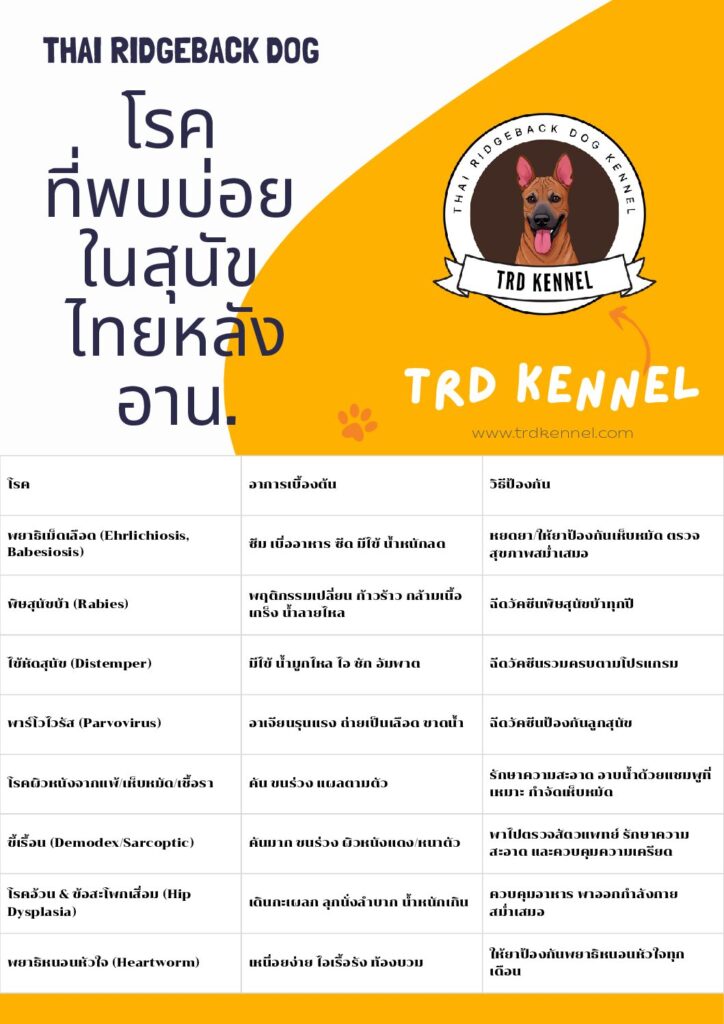
โรคที่พบบ่อยในสุนัขไทยหลังอาน

สุนัขไทยหลังอาน (Thai Ridgeback Dog) ถือเป็นสุนัขพันธุ์พื้นเมืองที่มีสุขภาพแข็งแรงและทนทานกว่าสายพันธุ์ต่างประเทศหลายชนิด เพราะปรับตัวเข้ากับสภาพอากาศร้อนชื้นของไทยได้ดี แต่ก็ยังมี โรคหรือปัญหาสุขภาพที่พบบ่อย ซึ่งเจ้าของควรรู้ไว้เพื่อตรวจเช็กและป้องกันได้ทันเวลา ได้แก่


🐕 โรคและปัญหาสุขภาพที่พบบ่อยในสุนัขไทยหลังอาน

  1. โรคพยาธิเม็ดเลือด (Ehrlichiosis, Babesiosis, Anaplasmosis)
    • สาเหตุ: เห็บกัดและถ่ายทอดเชื้อ
    • อาการ: ซึม เบื่ออาหาร ซีด มีไข้ เลือดออกง่าย น้ำหนักลด
    • การป้องกัน: หมั่นกำจัดเห็บหมัด ใช้ยาหยด/ยากินป้องกันเห็บหมัดเป็นประจำ
  2. โรคพิษสุนัขบ้า (Rabies)
    • พบบ่อยในสุนัขที่ไม่ได้ฉีดวัคซีน และปล่อยเดินเพ่นพ่าน
    • อันตรายถึงชีวิตและติดต่อสู่คนได้
    • การป้องกัน: ฉีดวัคซีนพิษสุนัขบ้าทุกปี
  3. โรคไข้หัดสุนัข (Canine Distemper)
    • มักเกิดกับลูกสุนัขที่ไม่ได้รับวัคซีนครบ
    • อาการ: มีไข้ น้ำมูกไหล ไอ ชัก หรือมีอาการทางระบบประสาท
    • การป้องกัน: ฉีดวัคซีนรวมตามโปรแกรม
  4. โรคพาร์โวไวรัส (Parvovirus)
    • พบมากในลูกสุนัขไทยหลังอานอายุน้อยกว่า 6 เดือน
    • อาการ: อาเจียนรุนแรง อุจจาระเป็นเลือด ขาดน้ำ
    • การป้องกัน: ฉีดวัคซีนป้องกัน
  5. โรคผิวหนัง (Skin problems)
    • มักเกิดจาก เห็บหมัด, เชื้อรา, แพ้อาหาร หรือภูมิแพ้ผิวหนัง (atopy)
    • อาการ: คัน ขนร่วง แผลตามผิวหนัง
    • การป้องกัน: อาบน้ำอย่างเหมาะสม รักษาความสะอาด กำจัดปรสิต
  6. โรคขี้เรื้อน (Mange: Demodex / Sarcoptic mange)
    • เกิดจากไรขี้เรื้อนใต้ผิวหนัง
    • อาการ: คัน ขนร่วงเป็นหย่อม ๆ มีผิวหนังแดงหรือหนาตัว
    • การป้องกัน: รักษาความสะอาด และตรวจสุขภาพสุนัขเป็นประจำ
  7. โรคอ้วนและปัญหาข้อสะโพก (Obesity & Hip Dysplasia)
    • ไทยหลังอานบางตัวเลี้ยงในบ้าน ไม่ได้ออกกำลังกาย อาจมีน้ำหนักเกิน
    • ส่งผลให้ข้อสะโพกเสื่อม ปวดขา เดินกะเผลก
    • การป้องกัน: ควบคุมอาหาร และพาออกกำลังกายสม่ำเสมอ
  8. โรคพยาธิหนอนหัวใจ (Heartworm Disease)
    • ติดเชื้อจากยุงที่มีพยาธิ
    • อาการ: เหนื่อยง่าย ไอเรื้อรัง ท้องบวม
    • การป้องกัน: ให้ยาป้องกันพยาธิหนอนหัวใจทุกเดือน

✅ สรุป

สุนัขไทยหลังอานมีภูมิต้านทานโรคทั่วไปดีกว่าสายพันธุ์ต่างประเทศ แต่ก็ยังเสี่ยงต่อ โรคติดเชื้อจากเห็บหมัด ยุง และโรคไวรัสในลูกสุนัข รวมถึงโรคผิวหนังและปัญหาข้อสะโพก เจ้าของจึงควร พาสุนัขตรวจสุขภาพประจำปี ฉีดวัคซีนครบถ้วน ใช้ยาป้องกันเห็บหมัด-ยุง และให้สุนัขออกกำลังกายอย่างเหมาะสม

All Thai Ridgeback Dog Owners in Bangkok Must Register and Microchip

Don’t Forget! All Thai Ridgeback Dog Owners in Bangkok Must Register and Microchip Their Pets

If you own a Thai Ridgeback Dog in Bangkok, it’s important to know that the city requires all pet owners to officially register their pets and have them microchipped. This regulation is not only a legal requirement but also ensures better safety and care for your beloved dog.


📌 Why Register and Microchip Your Thai Ridgeback?

  1. Proof of Ownership
    The microchip contains a unique ID number linked to the owner. If your Thai Ridgeback gets lost, the chip helps reunite you with your dog.
  2. Theft Protection
    Thai Ridgebacks are rare and valuable. A microchip serves as undeniable proof of ownership in case of disputes or theft.
  3. Legal Requirement in Bangkok
    Pet owners who fail to register their dogs may face fines according to Bangkok Metropolitan regulations.
  4. Health and Safety
    Registration allows authorities to monitor vaccinations and prevent the spread of rabies and other diseases more effectively.

📍 How to Register and Microchip Your Dog in Bangkok

  • Bring your Thai Ridgeback Dog and your ID card to your local district office.
  • Pay the required registration fee.
  • A veterinarian or officer will implant a microchip under your dog’s skin (safe and painless).
  • You will receive an official registration certificate as proof.

✅ Final Note

Registering and microchipping your Thai Ridgeback Dog is more than just following the law – it’s about protecting your pet and giving yourself peace of mind.

👉 So, if you live in Bangkok and own a Thai Ridgeback, don’t delay! Make sure your dog is properly registered and microchipped for safety, legality, and love.